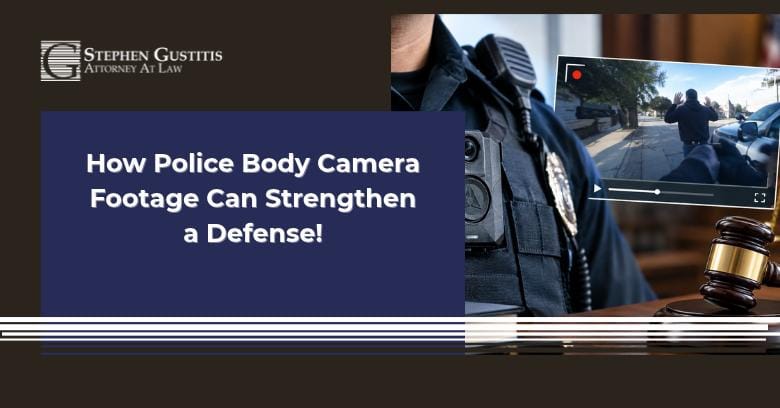
Most people arrested in Brazos County remember the stop as a blur of flashing lights, a string of questions, a roadside test on uneven pavement, and a paur of handcuffs. The offense report written hours later reads as a clean, confident narrative. The video recorded on the officer's chest tells a slower, messier, far more useful story, and it is often the single piece of evidence that moves a case. For that reason, experienced criminal defense lawyers treat body camera footage as the first thing to discover after an arrest in Bryan, Texas, not the last.
The urgency is that the footage doesn't sit around forever. Texas law sets a floor for how long agencies must keep recordings, and once a file ages out of the system, no argument, subpoena, or motion brings it back. Meanwhile, state lab blood results can take weeks or months, so video is often the only real evidence available in the early weeks of a case.
This article explains what Texas statutes require of agencies that record, how footage reaches the defense through discovery, what cameras capture that reports leave out, how video shapes DWI and traffic-stop cases in Brazos, Burleson, as well as Robertson Counties, and what a person should do in the first days after an arrest.
What Texas Law Says About Body Camera Footage
Texas body-worn camera rules live in Chapter 1701, Subchapter N of the Occupations Code, enacted through Senate Bill 158 in 2015. Section 1701.655 requires agencies to adopt a written policy covering when officers activate and deactivate cameras. Section 1701.660 sets retention. Section 1701.661 limits public release and allows agencies to charge for redaction and production, which can add up on long multi-officer recordings.
Retention and the 90-Day Clock
The statutory minimum is 90 days when a recording is not part of an ongoing investigation. A casual phone call asking an agency to hold a file isn't enough; defense lawyers use a written preservation letter, sent early and directed at the right records custodian, to freeze the recording in place. That letter should name every unit on scene, because a second or third officer's camera often has the better angle. In practice, a defense lawyer handling a case out of College Station, Texas, will send preservation demands to more than one agency at once when campus police, city officers, and a trooper all responded.
Getting a Copy: Discovery, Not a Public Records Request
Clients often assume they can file a public records request and get the video themselves. Access to footage tied to an open criminal case is limited, self-requests are often refused, and they signal to the State exactly what the defense is looking at. A better route is the Michael Morton Act, Article 39.14 of the Code of Criminal Procedure, which obligates the State to produce evidence on timely request as soon as practicable. Article 39.14(f) is why a criminal defense attorney can sit with a client and play the video but generally cannot email a copy. If the footage contradicts the official report, it serves to both clear the defendant and challenge the officer's credibility. Therefore, prosecutors have a constitutional duty to disclose it.
What the Camera Catches That the Report Leaves Out
Reports summarize; cameras record. The gap between the two is where cases are won, and it is why criminal defense lawyers review footage frame by frame instead of skimming it once.
Pre-Event Buffers and Driving Behavior
Axon Body 3 and Body 4 units, along with most in-car systems, save a pre-event buffer, typically around 30 seconds, often video-only with no audio. That buffer can show the driving the officer later describes as weaving, drifting, or failing to maintain a single lane. In the Bryan, Texas, area, where many stops begin on multi-lane roads with worn lane markings, it's worth pulling the buffer every time.
Consent, Miranda, and the Length of the Detention
A report may say the driver consented to a search. The audio reveals whether the officer asked a question or issued a command. Other details that only exist on video include:
- The precise wording used to request consent, and whether consent was withdrawn later.
- When Miranda warnings were given relative to the first question asked when person was taken into custody or their freedom of movement restrained.
- How many minutes passed between the reason for the stop being resolved and the start of the investigation into something else.
- Whether an "odor of alcohol" was ever mentioned contemporaneously, or only appeared in a report typed after the fact.
- How many officers surrounded the vehicle, and whether weapons were drawn.
Article 38.23, the Texas statutory exclusionary rule, is broader than its federal counterpart. When video raises a genuine fact dispute about the legality of a stop, detention, or search, the defense can earn a jury instruction telling jurors to disregard the evidence obtained.
Video in a DWI Case
DWI prosecutions depend heavily on the officer's narrative, and the camera checks that narrative. A first offense is a Class B misdemeanor carrying up to 180 days in county jail and a fine up to $2,000, and a reported BAC of 0.15 or higher raises the charge to a Class A. The license side also matters: a driver has 15 days from the DIC-25 or license suspension notice to request an ALR or Administrative License Revocation hearing, or the suspension takes effect automatically. Defense attorneys use the ALR hearing as an early look at the officer's testimony while the video is fresh.
DIC-24 and the Observation Period
Two procedural questions come straight off the recording.
- Did the officer read the DIC-24 statutory warning verbatim before requesting a breath or blood specimen, or paraphrase it?
- Did the required 15-minute deprivation and observation period occur before the Intoxilyzer 9000 was used, and does the camera confirm the officer watched the person the whole time?
Criminal defense law firms handling breath-test cases in Bryan and College Station, Texas, routinely compare the video timestamps with the instrument's printout.
SFSTs and NHTSA Clue Thresholds
Standardized field sobriety tests or SFSTs only mean something when they are administered the way they were validated. The clue thresholds are specific: four of six on horizontal gaze nystagmus, two of eight on the walk-and-turn, and two of four on the one-leg stand. Emerson v. State governs HGN or horizontal gaze nystagmus admissibility and the officer's qualification to administer it. On video, a defense lawyer looks at the instructions given, the surface and lighting conditions, whether the stimulus was moved at the correct speed, and whether the officer counted clues the recording does not support.
When the Camera Was Off, Muted, or Pointed Away
Clients ask what happens when no video exists. The answer is that the absence itself becomes an issue. Agency policy for body camera usage under 1701.655 of the Texas Occupations Code dictates activation, and an officer who departed from that policy can be questioned about it in front of a jury. Evidence.com audit logs show who viewed, downloaded, flagged, or re-categorized a file, which criminal defense law firms use to test whether a recording was mishandled rather than never created. Muted audio in the middle of a roadside conversation is its own kind of testimony, and defense lawyers rarely let it pass without explanation.
The Agencies That Hold the Footage in Brazos County and Beyond
Knowing which agency has the file matters as much as knowing the law. Footage in local cases can sit with the Bryan PD, College Station PD, Texas A&M University PD, the Brazos County Sheriff's Office, or DPS troopers working SH 6, FM 2818, SH 21, and US 190. Each has its own policy, custodian, and production fees. Criminal defense attorneys who work these courts daily know that misdemeanors go to County Courts at Law No. 1 and 2, while felonies go to the 85th, 272nd, and 361st District Courts.
Cases do not stop at the county line. Caldwell sits in Burleson County and Hearne in Robertson County, each with a different district attorney, sheriff's office, and retention habits. The US 79 and SH 6 corridor near Hearne produces heavy traffic-stop volume, so dash and body video of the stop's stated basis carries outsized weight there. Defense law firms that handle cases across all three counties plan their preservation letters accordingly.
Enforcement in the Bryan, Texas, and College Station area also spikes on a predictable calendar that includes A&M home game weekends at Kyle Field, Northgate on University Drive, First Friday in downtown Bryan, Chilifest near Snook each spring, Big Event weekend, finals and move-in, New Year's Eve, and the Fourth of July. Announced no-refusal periods or enforcement periods when judges are on-call to immediately approve blood-draw warrants for drivers who refuse roadside testing bring hospital draws into the mix, and the video of the warrant application and the draw itself becomes part of the record.
What to Do in the First Weeks After an Arrest
- Write down everything you remember about the stop while the details are fresh, including the time, location, and how many officers appeared.
- Hire counsel quickly so a preservation letter goes out well inside the 90-day retention floor.
- Request the ALR or Administrative License Revocation hearing within 15 days of the DIC-25 notice if a license suspension is in play.
- Avoid filing a personal records request for the footage, and let a criminal defense lawyer pursue it through Article 39.14 discovery instead.
- Expect to watch the video at the office rather than at home, since the statute restricts handing over copies.
Many criminal defense lawyers offer an initial consultation at no cost and Gustitis Law provides one so a person can understand their options before retaining a criminal defense attorney. Stephen A. "Steve" Gustitis is certified in criminal law by the Texas Board of Legal Specialization and is listed as a Texas Super Lawyer, an honor determined by his peers. He began as an Assistant District Attorney in Brazos County, founded his solo practice in 1994, and has spent his private practice career defending people accused of crimes in Bryan, College Station, and the surrounding counties.
Wrapping Up
Body camera video is evidence that expires. The 90-day retention floor, the 15-day ALR or Administrative License Revocation hearing deadline, and delays in lab results all point to the same conclusion - act early. Footage that contradicts a report can support a motion to suppress, an Article 38.23 or statutory exclusionary rule for jury instruction, or a dismissal, but only if it still exists when counsel asks for it.
Anyone facing charges in the Bryan, Texas, area should make preserving the recording their top priority. Criminal defense lawyers can send a preservation demand, file a timely discovery request, and review every camera on scene, not just the arresting officer's. Do not wait for a court date to start. Call Gustitis Law and schedule a free consultation now, while the video is still on the server!
“I’m Smart, I’m Good, I like to Win”
Stephen Gustitis
Criminal Defense Attorney at Law
Key Takeaways
- Texas agencies must keep body-camera recordings for at least 90 days when the footage isn't part of an ongoing investigation, so send a written preservation letter immediately.
- Footage reaches the defense through Article 39.14 discovery, not a personal public records request, and counsel can show a client the video but generally cannot provide a copy.
- Video frequently contradicts an offense report on consent wording, Miranda timing, detention length, and whether an odor of alcohol was ever mentioned on scene.
- In DWI cases, the recording shows whether the DIC-24 warning was read verbatim, whether the 15-minute observation period happened, and whether field sobriety tests met NHTSA standards.
- A license suspension becomes automatic unless an ALR or Administrative License Revocation hearing is requested within 15 days of the DIC-25 notice.
Frequently Asked Questions
Can I request the body camera video myself?
Generally no, and trying is usually counterproductive. Public access to footage from an open criminal case is narrow, and the request alerts the State to what the defense is examining.
How long before the footage is deleted?
As little as 90 days if the recording is not flagged as part of an ongoing investigation. A written preservation letter sent to the correct records custodian reliably stops the clock.
What if the officer never turned the camera on or muted it?
The absence becomes an issue in the case. Agency activation policy is required by statute, and an officer who deviated from it can be cross-examined about that choice.
Why can't my lawyer email me a copy of the video?
Article 39.14(f) restricts it. Counsel may show the recording to a client and discuss it in detail, but handing over a copy is generally not permitted.
The video looks bad. Does it still help?
Often, yes. Even unflattering footage can show an improper test administration, a missing warning, an overlong detention, or a search that exceeded the scope of any consent given.
Which agencies might have footage in my case?
Depending on where the stop happened, Bryan PD, College Station PD, Texas A&M University PD, the Brazos County Sheriff's Office, or DPS. Cases near Caldwell or Hearne involve Burleson or Robertson County agencies instead.
How soon should I hire a lawyer after an arrest?
Within days, not weeks. The retention floor, the 15-day ALR or Administrative License Revocation hearing deadline, and the need to identify every camera on scene all reward early action.