A single night at Northgate can reshape a student's next four years. A Texas A&M sophomore hands a bouncer a borrowed ID, a Blinn student gets pulled over three blocks from campus with a friend's vape pen in the console, a group celebrating after a home football Saturday draws the attention of a University Police officer and by 2 a.m., someone is being booked into the Brazos County Jail in Bryan. Most students assume campus police write tickets, that a campus incident stays on campus, and that a dismissed charge means the whole thing disappears. Every one of those assumptions is wrong and criminal defense lawyers know that the cost of learning that the hard way is measured in suspended semesters, lost scholarships, and professional licenses that never get issued.
The timing matters because the arrest calendar in Brazos County is predictable. Fall move-in, the first home games, Halloween, Ring Day, St. Patrick's Day, Spring Break, Chilifest in April, and finals week all produce clusters of alcohol and drug arrests. Brazos County also runs no-refusal weekends around football Saturdays and holidays, when prosecutors and judges stand by to sign blood-draw warrants. TABC agents work bars and events. Those are not random enforcement nights; they are staffed operations, and students are the target demographic. Experienced criminal defense attorneys in Bryan Texas see the same fact patterns arrive in waves, which is exactly why the response needs to be organized rather than improvised.
This article walks through what actually happens after a campus arrest in College Station Texas and the surrounding area: who has arrest authority, the two parallel proceedings a single arrest triggers, which charges carry the harshest hidden consequences, how dorm room searches and consent really work, what the driver's license and immigration fallout looks like, and which early decisions preserve the chance of a clean record later. The goal is not to scare anyone. It is to replace rumor with the specific rules that govern these cases.
Campus Police Are Real Police
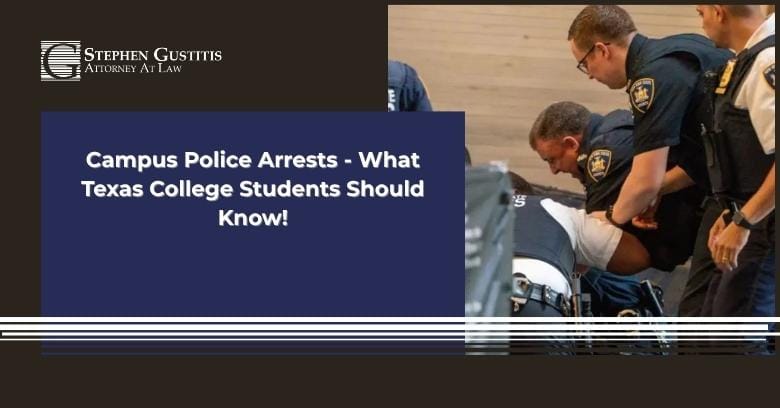
The single most common misunderstanding is the word security. Texas A&M's University Police Department and Blinn College's police department are fully commissioned law enforcement agencies operating under Texas Education Code §51.203. Their officers are licensed peace officers with the same authority to detain, search, arrest, and file charges as any officer from Bryan PD, the College Station Police Department, or the Brazos County Sheriff's Office. An UPD arrest is not an internal disciplinary matter that happens to involve a uniform. It generates a criminal case in a real court.
Who Files Charges and Where the Case Lands
Where a case goes depends entirely on the offense level and students are often surprised by how many different courthouses are involved. Criminal defense attorneys in College Station Texas routinely handle the same student in more than one forum at once.
- Class C misdemeanors including minor in possession, public intoxication, possession of drug paraphernalia, disorderly conduct, or fake ID under §106.07 are filed in a Justice of the Peace court or in the Bryan or College Station municipal courts.
- Class A and Class B misdemeanors, including DWI and most marijuana possession under two ounces, go to the Brazos County Courts at Law.
- Felonies are filed in the 85th, 272nd, or 361st District Courts in Bryan.
- Chilifest arrests fall outside Brazos County entirely; the event sits in the Snook and Burleson County area, with Caldwell as the county seat, which means a different prosecutor's office and different court.
That fragmentation is why local knowledge is not a marketing slogan. Each court has different practices and expectations, and criminal defense firms in Bryan Texas that appear in these courtrooms weekly know which prosecutors will discuss pretrial diversion and what judges expect before a case is reset.
What Happens in the First 24 to 48 Hours
After booking at the Brazos County Jail, the student appears before a magistrate, typically within 24 hours for a misdemeanor or 48 hours for a felony, to be advised of the charges and have bail set. Since 2021, magistrates review a public safety report before setting conditions, and many students with no history are released on personal recognizance. If a surety bond is required, the bondsman's premium is commonly around ten percent of the bond amount industry-wide, and that money is not refundable no matter how the case ends.
The practical advice for that window is narrow: stop talking about the case. Statements made to officers, to jail staff, to a resident advisor, or in a group chat routinely become evidence. Criminal defense lawyers spend a great deal of time undoing damage caused in the first twelve hours by students who believed that explaining themselves would make the problem smaller.
One Arrest, Two Separate Proceedings
A campus arrest can set two independent processes in motion and they run on different tracks with different rules. The criminal case proceeds under the criminal standard of proof. The university's Office of Student Conduct proceeds under Student Rule 24 using a preponderance-of-the-evidence standard, meaning a conduct panel can find a violation on evidence that would never support a criminal conviction.
Critically, a dismissal or an acquittal in court does not automatically end the conduct case. The university decides whether it broke its own rules, not whether the State met its burden. Interim measures can also be imposed while a conduct matter is pending, which may affect housing, access to certain buildings, or participation in organizations. Students in the Corps, on athletic teams, in Greek organizations, or holding scholarship conditions may face additional internal review.
Nobody should assume an arrest is automatically transmitted to the university and nobody should assume it never will be. What matters is that the student understands the reporting obligations attached to scholarships, teams, honor code processes, and licensing applications before answering any question in writing. Coordinating criminal defense with the conduct response is one reason criminal defense law firms in College Station Texas ask about a student's enrollment status, visa status, and major at the first meeting.
The Charges That Do the Most Damage
Alcohol: Under-21 Rules Are Not the Adult Rules
A minor in possession charge under Alcoholic Beverage Code §106.05 is a Class C misdemeanor that may result in a fine of up to $500 and requires completion of an alcohol awareness program lasting approximately eight to twelve hours, community service typically in the eight-to-forty-hour range, and a 30-day driver's license suspension on a first offense. Students often pay the fine to make it go away and discover later that a conviction on a Class C alcohol offense is a reportable event on graduate and professional applications.
Driving cases split sharply by age. A driver under 21 can be charged with DUI by a minor under §106.041, which requires only a detectable amount of alcohol, no specific blood alcohol number at all. A DWI for adults, according to Penal Code §49.04, necessitates a blood alcohol concentration of 0.08 or the impairment of normal mental or physical abilities. Different statutes, different courts, different collateral consequences, and different defense strategies. A fake ID adds its own risk: §106.07 is a Class C, but altering or presenting a tampered government document can be charged under Penal Code §37.10, which reaches felony territory depending on the facts.
There is also a separate administrative case after most alcohol-related driving arrests. The Administrative License Revocation process is separate from the criminal court file. You must request a hearing within 15 days of the notice of suspension, or the suspension takes effect automatically, typically 90 days for a failed test and 180 days for a refusal on a first offense. Missing that deadline is one of the most common and yet avoidable losses in a student case and criminal defense attorneys in Bryan Texas treat it as an immediate calendar item rather than an afterthought.
THC Vapes and Edibles: The Felony Most Students Never See Coming
This is the trap. Plant marijuana weighing less than two ounces is classified as a Class B misdemeanor, which can result in a penalty of up to 180 days in jail and a fine of $2,000. A THC vape cartridge, wax, or an edible is a concentrate, treated as Penalty Group 2 under Health and Safety Code §481.116 and under one gram is classified as a state jail felony, carrying a potential sentence of 180 days to two years. A single cartridge that costs less than a textbook can produce a felony allegation.
Location can make it worse. The drug-free zone enhancement under §481.134 can apply within 1,000 feet of university premises, which sweeps in many on-campus arrests and much of the housing immediately adjacent to campus and Northgate. Possession questions also get complicated fast in shared spaces: when a cartridge is found in a dorm room, a car, or an apartment with four roommates, the State often charges everyone with access and lets the case sort itself out later. Criminal defense lawyers attack those cases through the law of possession consisting of affirmative links, knowledge, and control, not by arguing about fairness.
Searches, Dorm Rooms, and What Consent Really Means
Students consistently give away their best defense in the doorway. A few distinctions worth knowing before it happens:
- A resident advisor entering for a housing inspection or a policy check is not the same as a police search, but what the RA sees can be reported and can become the basis for an officer's next step.
- Consent given to an officer at the door is generally valid and generally waives the argument that the search was unlawful. Consent can be declined calmly and without hostility.
- A warrant is a document. Asking to see it and reading what it authorizes is not obstruction.
- Smell, plain view, and statements made in the hallway all get written into the report, and the defense reviews it later.
Declining to consent is not a magic shield as officers may have other lawful grounds, but it preserves the legal issues that a criminal defense attorney can later litigate. Once consent is given, those issues usually evaporate. Criminal defense lawyers can only challenge what the record leaves available to challenge.
Records, Licenses, and the Long Game
Most student clients care less about a fine than about the next ten years. That is the right instinct, because the outcome chosen at the courthouse determines what you can clean up later.
Expunction or the destruction of the arrest record generally becomes available after a dismissal following a waiting period of 180 days for a Class C, one year for a Class A or B, and three years for a felony. Deferred disposition on a Class C and pretrial diversion on higher-level cases are valuable precisely because they can preserve eligibility to clear the record, while a straight plea to a conviction usually forecloses it. By contrast, nondisclosure seals a record from public view but leaves it visible to certain agencies and licensing bodies. Nobody can promise dismissal or sealing in advance, but the difference between an outcome that leaves the door open and one that closes it permanently often comes down to the first setting.
Two other consequences deserve attention. A drug conviction can still trigger a Texas driver's license suspension, commonly around 180 days, even though the federal student aid application no longer asks about drug convictions after the FAFSA Simplification Act. And students on F-1 visas face immigration exposure that is entirely separate from the criminal punishment; controlled substance allegations in particular require careful handling with counsel who understands the interaction. Licensing boards for law, nursing, teaching, and engineering ask direct questions about arrests and dispositions, and Corps commissioning has its own review. Well-run criminal defense law firms build the case backward from those questions.
Choosing Counsel and Involving Parents
Parents often make the call and that is fine: a parent can retain counsel and pay the fee, but the attorney-client relationship and confidentiality belong to the student, who decides what to share. Clarifying that expectation early prevents friction later.
When comparing criminal defense attorneys in Bryan Texas, the questions worth asking are concrete:
- Does the attorney appear regularly in the Brazos County Courts at Law and the district courts in Bryan?
- Is the criminal defense lawyer board certified in criminal law by the Texas Board of Legal Specialization?
- Does the firm handle the ALR hearing and the criminal case together?
Choosing a criminal defense attorney is an important decision for both the student and their family. Parents can provide valuable support, but the student should understand who represents them, what confidentiality means, and how the attorney will handle the case. Asking specific questions about experience, qualifications, and services can help everyone begin the process with clear expectations.
Final Considerations
A campus arrest in College Station Texas or nearby Bryan is not a campus matter; it is a criminal case, often a parallel student conduct case, and sometimes an administrative license case, all moving at once on different clocks. The most important decisions are made early: staying quiet, preserving search issues, requesting an ALR hearing within 15 days, and choosing a disposition that keeps expunction or nondisclosure on the table rather than one that forecloses it forever.
Students should gather every document they received at the jail, write down what happened while it is fresh, avoid discussing the incident with anyone but counsel, and have a criminal defense attorney review the case before the first court setting or conduct meeting. Because a free consultation costs nothing and waiting periods and deadlines run whether anyone is paying attention, there is no strategic reason to wait and every reason not to!
Key Takeaways
- Texas A&M UPD and Blinn College PD are fully commissioned police agencies under Texas Education Code §51.203, with the same arrest authority as any municipal or county law enforcement agency.
- One arrest can trigger two independent proceedings, and a dismissal in criminal court does not automatically resolve a university student conduct case decided under a preponderance-of-the-evidence standard.
- A THC vape cartridge or edible is treated as a Penalty Group 2 concentrate, so under one gram is a state jail felony, unlike under two ounces of plant marijuana, which is a Class B misdemeanor.
- Drivers under 21 can be charged with DUI by a minor on a merely detectable amount of alcohol, while an adult DWI requires 0.08 or loss of normal faculties.
- You must file a hearing request within 15 days of an Administrative License Revocation notice or suspension, typically 90 days for a failed test and 180 days for a refusal, which takes effect automatically.
- Deferred disposition and pretrial diversion can preserve eligibility to clear a record later, while a straight conviction usually eliminates that option.
Frequently Asked Questions
Will Texas A&M find out about my arrest and could I lose housing?
The university may learn of an arrest through several channels and a student conduct case can proceed independently of the criminal case. No one should assume an arrest is automatically reported or that it never will be; what matters is understanding the specific reporting obligations attached to enrollment, housing, scholarships, and organizations before answering anything in writing. Interim measures can affect housing or building access while a conduct matter is pending.
Does a Class C misdemeanor stay on my record forever?
Not necessarily. A Class C that is dismissed can generally be expunged after a 180-day waiting period and deferred disposition is often structured to preserve that possibility. Paying the fine to make it go away is a conviction and that choice can eliminate the ability to clear the record. Waiting periods for higher offenses are one year for Class A and B and three years for a felony.
What is the difference between expunction and nondisclosure?
Expunction destroys the arrest record, while nondisclosure seals it from public view but leaves it accessible to certain government agencies and licensing boards. Expunction is the stronger remedy and generally follows dismissals, acquittals, and successful pretrial diversion. Eligibility depends on the offense level and the disposition, so identify the target outcome at the start of the case.
My roommate had the vape cartridge, not me. Why am I charged?
Because the State can charge everyone with access to a shared space and litigate the possession issue later. Texas law requires proof that a person knowingly exercised care, custody, control, or management of the substance, which means the defense focuses on affirmative links between the accused and the item. These cases are frequently winnable on exactly that point.
Can this affect my ability to sit for the bar, nursing boards, or commission through the Corps?
Yes as licensing boards and commissioning processes ask direct questions about arrests as well as dispositions and the answers can trigger additional review. That is why the disposition chosen in a minor case matters far more than the fine attached to it. Counsel should be told about career plans at the first meeting so the strategy accounts for them.
I am on an F-1 visa. Does an arrest affect my immigration status?
It can& and controlled substance allegations are especially serious for non-citizen students regardless of the criminal punishment imposed. Immigration consequences are separate from the criminal case and are not resolved by simply paying a fine or accepting a quick plea. Any student on a visa should disclose that status to counsel immediately.
Do I have to request a driver's license hearing separately after a DWI arrest?
Yes because the Administrative License Revocation process is separate from the criminal case and a hearing must be requested within 15 days of the notice or the suspension takes effect automatically. First-offense suspensions are typically 90 days after a failed test and 180 days after a refusal. This deadline is independent of any court date.
Can my parents talk to my criminal defense lawyer if they are paying the fee?
A parent may retain and pay counsel, but the attorney-client relationship belongs to the student, who controls what information is shared. Many families set communication expectations at the outset so everyone understands the boundaries. Clarifying this early avoids conflict as the case progresses.
How much does a criminal defense case cost?
Fees vary widely by offense level and complexity, ranging from flat fees for a Class C matter to substantially higher amounts for a contested felony jury trial. Bond premiums are a separate expense, typically around 10% of the bond amount. A consultation is the best place to get a specific quote for your case, and many attorneys offer that consultation at no cost.