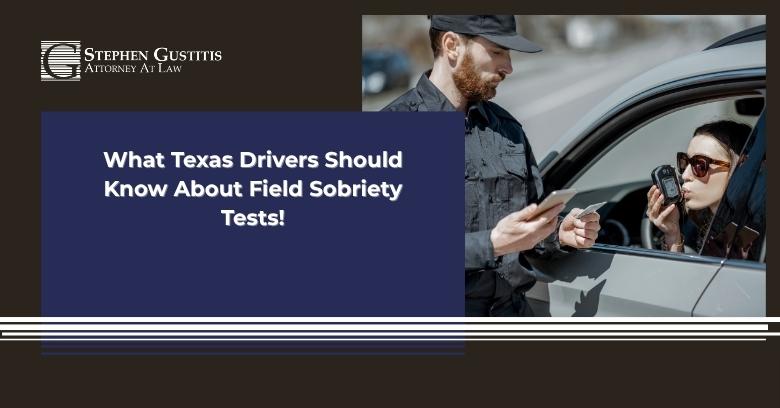
Every driver hopes to avoid an encounter with law enforcement, but traffic stops are a reality of life on Texas roads. For those in Bryan Texas, College Station, and surrounding areas, understanding your rights and responsibilities during a police stop, especially one involving suspicion of driving under the influence (DUI) or driving while intoxicated (DWI) is crucial. One of the most common tools law enforcement officers use in these situations is the field sobriety test.
Field sobriety tests are standardized assessments designed to help officers gauge a driver's level of impairment. They are not as simple as they might appear on television and the outcome of these tests can have a significant impact on your future. Many drivers in Bryan and College Station Texas are not fully aware of what these tests entail, why they are administered, or how the results can affect subsequent legal proceedings.
Criminal defense lawyers routinely encounter misconceptions about field sobriety tests. Some people believe they are legally required to participate, while others may not realize how their performance could be affected by nerves, medical conditions, or even road conditions might be interpreted against them. That is why it is so important to have solid, factual information at your disposal.
If you find yourself pulled over in Texas with an officer requesting a field sobriety test, your actions and decisions in those moments can set the course for everything that follows. Whether you are a student driving from a late-night study session at Texas A&M, a professional heading home from a work event, or a local resident enjoying a night out, this guide will help you understand your legal rights, what to expect during a field sobriety test, and how criminal defense law firms in Bryan and College Station can assist you if an arrest follows.
Let's break down the essentials because when it comes to protecting your reputation and your rights, a little knowledge goes a long way.
The Purpose and Types of Field Sobriety Tests
What Are Field Sobriety Tests?
Field sobriety tests are a series of physical and cognitive tasks designed by law enforcement to evaluate a driver's level of impairment. The main goal is to establish probable cause for a DUI or DWI arrest. Federal agencies, including the National Highway Traffic Safety Administration or NHTSA, have developed standardized field sobriety tests or SFSTs, which are widely used by police officers throughout Texas, including Bryan and College Station.
Common Types of Field Sobriety Tests
There are three primary standardized tests:
-
Horizontal Gaze Nystagmus or HGN Test:
The officer asks you to follow an object, usually a pen or flashlight, with your eyes. They are looking for involuntary jerking of the eyes, which can be more pronounced when someone is intoxicated. -
Walk-and-Turn Test:
This test involves walking heel-to-toe along a straight line, then turning and walking back. Officers look for balance, ability to follow instructions, and coordination. -
One-Leg Stand Test:
You are asked to stand on one leg for about 30 seconds without swaying, hopping, putting your foot down, or using your arms to balance.
These tests are supposed to be objective; however, criminal defense attorneys in Bryan and College Station have seen firsthand that factors such as anxiety, fatigue, medical issues, uneven pavement, or even ill-fitting footwear can heavily influence your performance.
Non-Standardized Field Sobriety Tests
Occasionally, an officer may use other non-standardized tests, such as reciting the alphabet, counting backward, or touching your fingers to your nose. These are not as scientifically validated as the standardized tests and criminal defense law firms often challenge their reliability in court.
What Texas Laws Say About Field Sobriety Tests
Are You Required To Take a Field Sobriety Test?
Here is a crucial fact: In Texas, you are not legally required to submit to field sobriety tests. You have the right to politely refuse them; however, it is important to communicate your refusal calmly and respectfully, as confrontational behavior can complicate the situation and may be noted in the police report.
It is different from chemical tests such as breath, blood, or urine tests which are subject to Texas's implied consent laws. Refusal of a chemical test after a lawful arrest can result in automatic driver's license suspension. Yet field sobriety tests are entirely voluntary.
What Happens If You Refuse?
If you decline a field sobriety test in Bryan or College Station, the officer must decide whether they have sufficient evidence to make a DUI or DWI arrest based on other observations such as slurred speech, odor of alcohol, or erratic driving. Refusing the test does not guarantee you will not be arrested, but it does mean there will be less physical evidence to use against you later.
Criminal defense lawyers often advise that polite refusal causes fewer problems than a failed test, especially since these tests can be difficult to pass even when sober.
How Field Sobriety Test Results Are Used
Establishing Probable Cause
The primary aim of field sobriety tests is to help officers establish probable cause for a DUI or DWI arrest. The officer will record your performance in detail, everything from your ability to follow instructions to your physical movements. These observations become part of the police report and can be used as evidence against you in court.
Impact on Court Cases
Field sobriety test results can play a pivotal role in DUI or DWI cases. Prosecutors often rely on this evidence to argue that a driver was too impaired to operate a vehicle safely. Yet criminal defense attorneys in Bryan and College Station regularly challenge the validity of these tests based on factors such as:
- The officer's instructions were not clear
- Road or weather conditions
- Medical or physical issues
- Nervousness or anxiety
Lawyers from respected criminal defense law firms have successfully argued for the exclusion of field sobriety test results on the grounds of improper administration or lack of objectivity.
Potential Consequences of Failing or Refusing a Field Sobriety Test
-
If You Fail the Test: A failed field sobriety test does not always mean you will automatically be convicted; however, it does give the officer probable cause to arrest and can lead to further testing such as a breathalyzer test or a blood draw. If your case goes to court, prosecutors will likely use your performance as evidence of intoxication.
This is where skilled criminal defense lawyers in Bryan and College Station are invaluable. They will scrutinize every detail including how the test was administered, environmental conditions, and any factors that could have influenced your performance.
- If You Refuse the Test: Refusing a field sobriety test will not result in the automatic penalties associated with refusing a breath or blood test, but it could still lead to arrest if the officer feels there is sufficient evidence of impairment. The lack of field sobriety test results may limit the prosecution's case, but your refusal could still be mentioned during trial.
This is another area where having a knowledgeable criminal defense attorney is crucial. An experienced lawyer will know how to frame your refusal in the best possible light and counter any attempts to present it as an admission of guilt.
How A Criminal Defense Lawyer Can Help
1. Protecting Your Rights
Criminal defense lawyers in Bryan Texas and nearby College Station serve as your advocates from the very first interaction with law enforcement through every stage of the legal process. They will:
- Review body camera footage and police reports for procedural errors
- Identify any physical, medical, or environmental factors that could have affected test performance
- Challenge the administration and validity of the field sobriety tests
- Negotiate with prosecutors for reductions or dismissal of charges based on weak evidence
2. Navigating the Legal Process
A good criminal defense attorney understands local court procedures, knows the nuances of Texas law, and has established relationships with area prosecutors. They can spot inconsistencies in officer testimony, challenge questionable evidence, and fight for your best outcome, whether that means a case dismissal, reduction in charges, or a favorable plea agreement.
3. Choosing the Right Criminal Defense Law Firm
When facing potential DUI or DWI charges, it is vital to select a criminal defense law firm with a strong track record in Bryan and College Station, Texas. Look for attorneys who specialize in DUI/DWI cases, have familiarity with the local legal landscape, and prioritize client communication. Experienced legal teams can often anticipate the prosecution's strategy and build a strong defense to protect your future.
What To Do If You Are Stopped in Bryan or College Station
If you are pulled over and suspected of DUI or DWI in Bryan, College Station, or anywhere in Texas, here's what criminal defense attorneys recommend:
- Remain calm and be polite. Do not argue or make sudden movements.
- Provide your license, registration, and insurance when requested.
- If asked to step out, comply but know your rights regarding field sobriety tests.
- You can politely refuse to perform field sobriety tests.
- If arrested, exercise your right to remain silent and request an attorney immediately.
The right criminal defense lawyer can make a dramatic difference in how your case is resolved. They will work hard to shield you from unfair treatment, see that your rights are protected, and help you pursue the best possible outcome.
Conclusion
Field sobriety tests play a major role in the DWI and DUI process in Texas, especially in cities like Bryan and College Station where law enforcement is vigilant. Knowing your rights and the potential consequences can make all the difference if you are ever pulled over on suspicion of impaired driving.
Remember that field sobriety tests are voluntary in Texas. You are not obligated to perform them and there are valid reasons to politely decline. If you submit to a test and are arrested or if you refuse and still face charges, the path forward is not hopeless.
The top criminal defense lawyers and law firms in Bryan and College Station routinely challenge field sobriety test evidence, advocate for client rights, and fight for fair outcomes. Do not let a roadside test or an intimidating legal process define your future. If you or a loved one faces DUI or DWI charges, consult a skilled criminal defense attorney immediately as they can help you understand your options, build a strong defense, and protect your reputation and freedom.
If you need help, do not hesitate to reach out to an experienced criminal defense law firm in Bryan or College Station Texa, today. The sooner you get expert guidance, the more empowered you will be to make informed decisions and move forward with confidence!
Key Takeaways
- Field Sobriety Tests Are Not Mandatory in Texas: If you are stopped by law enforcement in Bryan, College Station, or anywhere in Texas, you are not legally required to perform field sobriety tests. Polite refusal is within your rights.
- Impact of Test Results on Legal Proceedings: Performance on field sobriety tests can greatly influence the outcome of DUI/DWI charges. Even sober individuals can struggle with these tests due to nerves or physical conditions.
- Refusal Does Not Mean Automatic Penalties: While refusing a breath or blood test can lead to license suspension, refusing a field sobriety test does not trigger the same automatic sanction. You may still be arrested based on other observations.
- Environmental and Personal Factors Matter: Conditions like uneven pavement, poor lighting, weather, or medical issues can all affect your test performance and criminal defense attorneys regularly challenge test validity based on these factors.
- Legal Representation Is Vital: Engaging a skilled criminal defense lawyer in Bryan or College Station significantly boosts your chances of a favorable outcome. They know local laws and court systems and can spot flaws in the prosecution's case.
- Criminal Defense Law Firms Offer Strategic Defense: Law firms specializing in DUI/DWI defense use their experience to challenge unfair evidence, negotiate with prosecutors, and protect your interests from start to finish.
- Immediate Legal Advice Is Crucial: If you are arrested or suspect you may face charges, contact a criminal defense attorney without delay. Early intervention can improve your odds by preserving evidence and building a stronger defense.
- Document Everything: Take note of the events leading up to and during your traffic stop. Share these details with your attorney as they may reveal important defense angles.
- Know Your Rights: You have the right to remain silent and to request a lawyer. Use these rights to avoid self-incrimination and receive fair treatment.
- Stay Calm and Respectful: Remaining composed throughout your encounter with law enforcement makes sure that your interactions are documented favorably and reduces the risk of additional complications.
FAQs
1. Are field sobriety tests required by law in Texas?
No, you are not legally required to take field sobriety tests in Texas. You can politely decline and there are no automatic legal penalties for refusal.
2. Can refusing a field sobriety test in Bryan or College Station get me arrested?
Yes, refusal may still result in arrest if the officer has other reasons to believe you are impaired. Yet refusing limits the prosecution's evidence at trial.
3. What happens if I fail a field sobriety test?
Failing may lead to a DUI/DWI arrest and further testing. Of course, poor performance can stem from nervousness, medical issues, or environmental factors, points a criminal defense lawyer can challenge.
4. Will my driver's license be suspended if I refuse a field sobriety test?
No. License suspension applies to chemical test including breath, blood, and urine refusals, not field sobriety tests.
5. Do field sobriety test results guarantee a conviction?
Not necessarily. Criminal defense attorneys challenge test administration, conditions, and officer interpretations to contest the results in court.
6. Should I answer questions about drinking if I am stopped for DUI/DWI?
You have the right to remain silent. Politely decline to answer questions without an attorney present to avoid self-incrimination.
7. Can my medical condition affect my test performance?
Absolutely. Health issues, injuries, or medications can affect your ability to perform field sobriety tests. Let your criminal defense attorney know about these conditions.
8. Are field sobriety tests always accurate?
No. Even standardized tests can be influenced by nerves, fatigue, uneven pavement, poor lighting, and other external factors.
9. How do I find a good criminal defense law firm in Bryan or College Station?
Look for firms with local experience handling DUI/DWI cases, a proven track record, and positive client reviews. Consultations with criminal defense attorneys are often free.
10. What should I do immediately after being arrested for DUI or DWI?
Stay silent, request a lawyer, and avoid making any statements until you speak with an experienced criminal defense attorney. This approach best protects your rights and options.